 Posted by
 The Strasbourg Cathedral, officially known as Notre-Dame de Strasbourg, is one of the most important Gothic cathedrals in Europe. Rising above the old town of Strasbourg, this monumental building dominates the city skyline and has shaped Strasbourg’s identity for centuries.
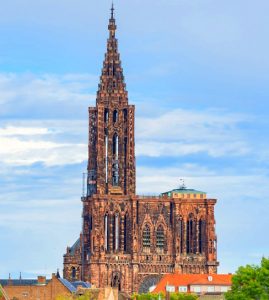
This very detailed English travel guide explains the history, architecture, interior highlights, tower views, visiting tips, and cultural importance of Strasbourg Cathedral. The article is written in a clear, factual style and designed for long-term SEO performance.
Guided tours & experiences near Strasbourg
Guided city walks, cultural tours, and regional experiences:
Why Strasbourg Cathedral is so special
For more than 200 years, Strasbourg Cathedral was the tallest building in the world. Even today, it remains one of the finest examples of High Gothic architecture.
What makes the cathedral unique:
- Single asymmetrical tower
- Highly detailed sandstone façade
- Famous astronomical clock
- Strong Franco-German cultural symbolism
Unlike many French cathedrals, Strasbourg Cathedral reflects both French and German influences.
Location in the old town
The cathedral stands at the heart of Strasbourg’s historic center on the Grande Île, a UNESCO World Heritage Site.
- Surrounded by medieval streets
- Close to Petite France
- Easy access on foot
A brief history of Strasbourg Cathedral
The cathedral’s history stretches back more than 1,000 years.
Early beginnings
The first church on this site was built during Roman times. A Romanesque cathedral stood here before the Gothic structure we see today.
Gothic construction
Construction of the current cathedral began in the 12th century. Over several generations, builders gradually transformed the structure into a Gothic masterpiece.
- Main construction: 1176–1439
- Sandstone sourced from the Vosges
- Influence of both French and German masons
Political and religious changes
Strasbourg Cathedral has been Catholic, Protestant, and Catholic again, reflecting the city’s changing rulers.
The western façade
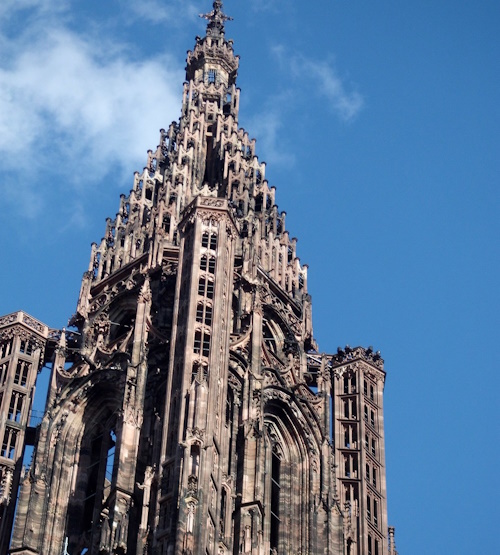
The western façade of Strasbourg Cathedral is considered one of the most elaborate Gothic façades in Europe.
Key features:
- Dense sculptural decoration
- Biblical scenes carved in stone
- Large rose window
The warm pink sandstone changes color depending on light and time of day.
The single tower
Unlike many Gothic cathedrals with two towers, Strasbourg Cathedral has only one completed tower.
- Height: approx. 142 meters
- Formerly the tallest building in the world
- Iconic openwork spire
The missing second tower adds to the cathedral’s distinctive appearance.
Interior overview
The interior of Strasbourg Cathedral feels both monumental and restrained.
Main impressions:
- High vaulted ceilings
- Filtered light through stained glass
- Clear Gothic proportions
The interior is less ornate than some French cathedrals, reflecting Protestant influence during parts of its history.
The astronomical clock
The astronomical clock is one of the cathedral’s most famous attractions.
Highlights:
- Dates from the 16th–19th centuries
- Shows planetary movements
- Animated figures at certain times
The clock combines science, religion, and art.
Stained glass windows
Strasbourg Cathedral features stained glass from several periods.
- Medieval windows
- Later restorations
- Strong use of deep colors
Some windows were removed during wars and later replaced.
The pulpit
The Gothic pulpit is another interior highlight.
- Highly detailed stone carving
- Scenes from Christian teachings
- Central preaching location during Protestant period
Climbing the tower
One of the most popular activities is climbing the cathedral tower.
What to expect
- Over 300 steps
- Narrow staircases
- Outstanding views
The view
From the viewing platform, visitors can see:
- Entire old town of Strasbourg
- The Rhine River
- The Black Forest on clear days
- The Vosges mountains
Religious services
Strasbourg Cathedral remains an active place of worship.
- Regular services
- Special events on holidays
- Organ concerts
Visitors are expected to behave respectfully during services.
Music and the organ
The cathedral is famous for its organ tradition.
- Historic organs
- Regular concerts
- Strong musical heritage
How long should you plan?
- Quick visit: 30–45 minutes
- Standard visit: 1–1.5 hours
- With tower climb: 2 hours
Best time to visit
- Morning: fewer crowds
- Late afternoon: best light on façade
- Weekdays: quieter than weekends
Tickets and entrance
Entrance to the cathedral itself is free.
- Tower climb: ticket required
- Astronomical clock: small fee
Accessibility
Due to its age, accessibility is limited.
- Main floor accessible
- Tower not wheelchair accessible
Photography rules
- Photography allowed
- No flash during services
- Tripods usually restricted
Nearby sights
Who should visit Strasbourg Cathedral?
- First-time visitors to Strasbourg
- Architecture enthusiasts
- History lovers
- Photographers
Who might be disappointed?
- Visitors expecting interactive exhibits
- Those unable to climb stairs
Conclusion
Strasbourg Cathedral is more than a landmark – it is the historical, cultural, and visual heart of the city. With its monumental façade, remarkable tower, and deep historical layers, it ranks among Europe’s most important cathedrals and is an essential stop on any visit to Strasbourg.
Related guides